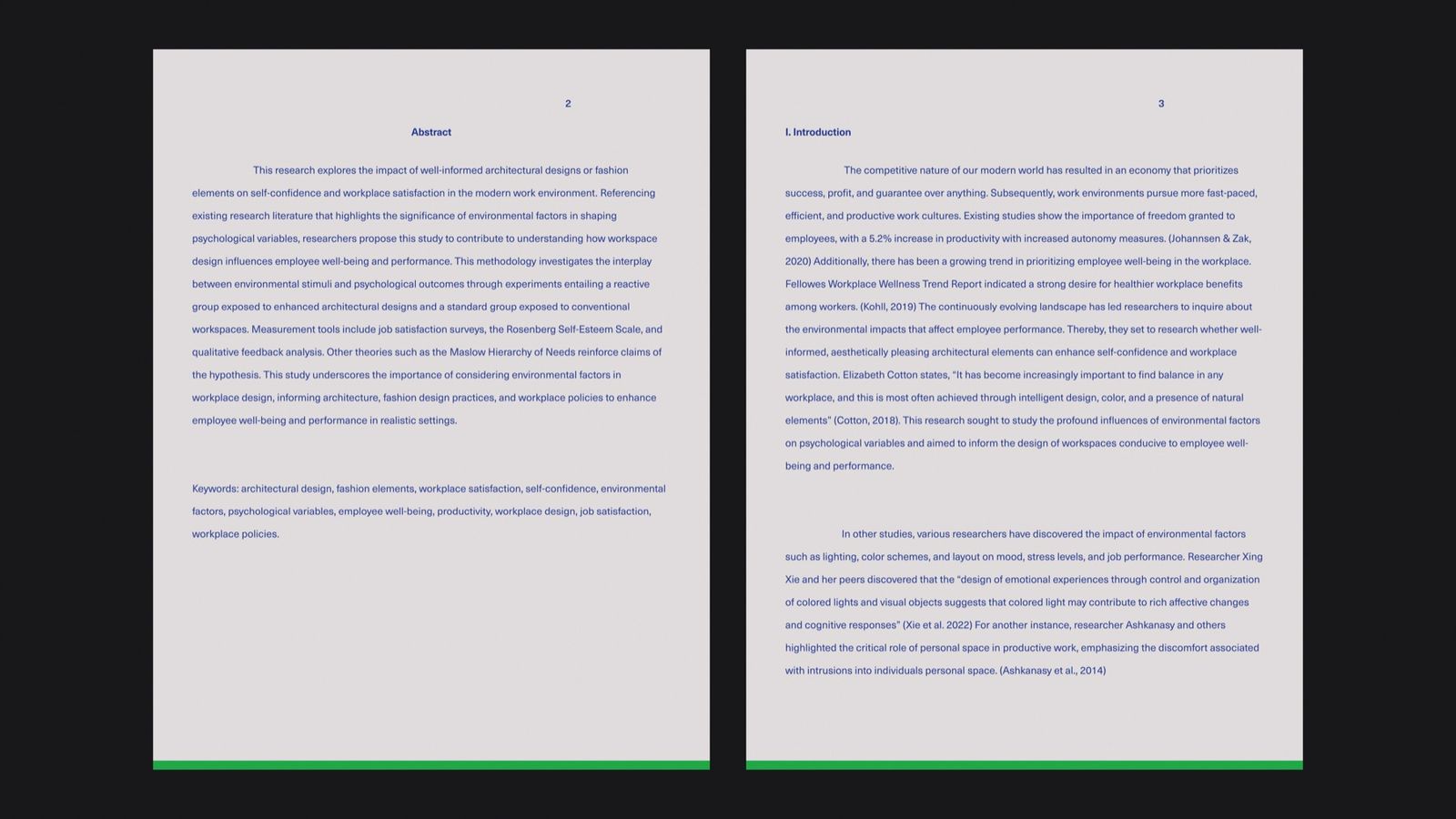
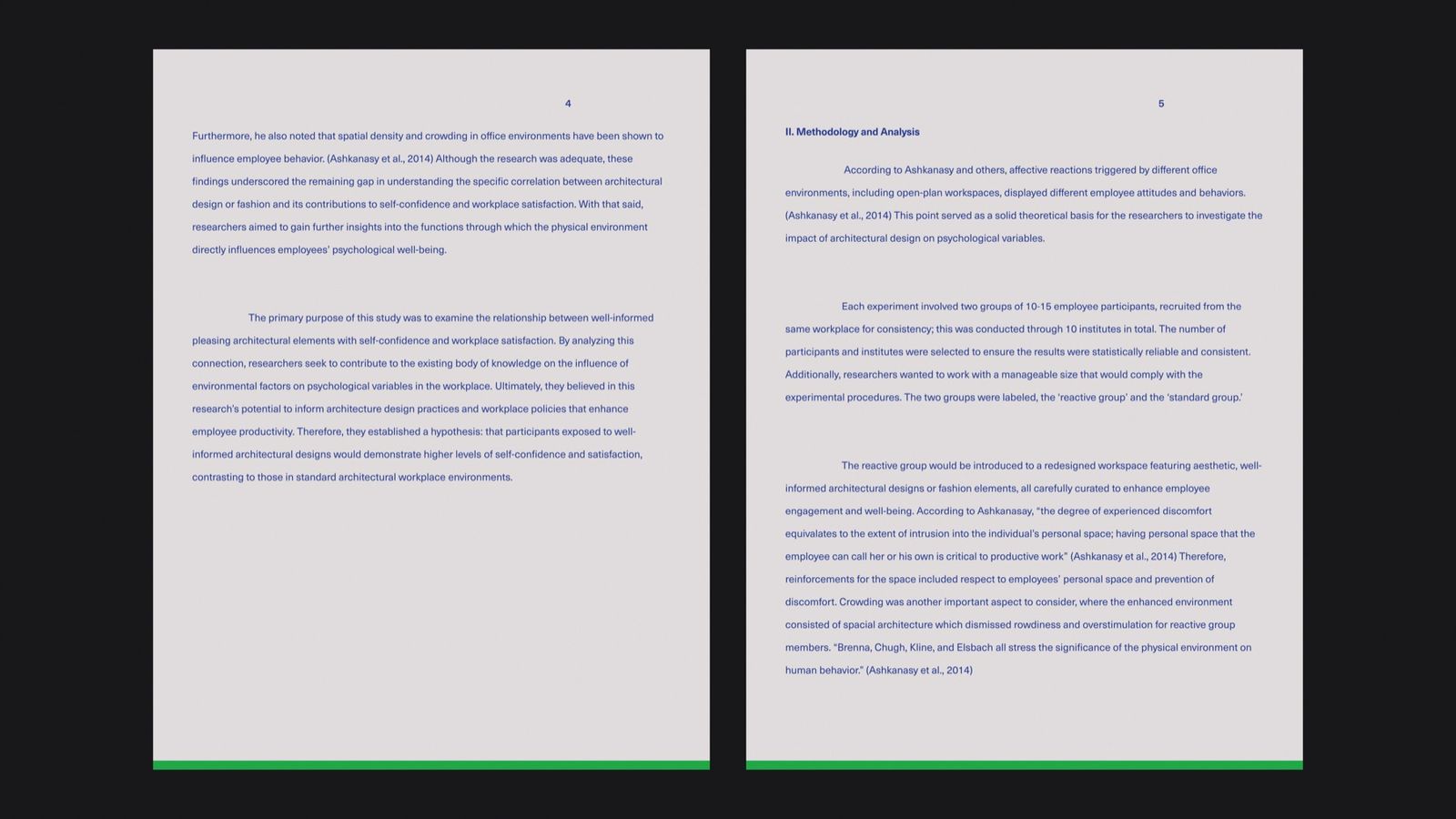
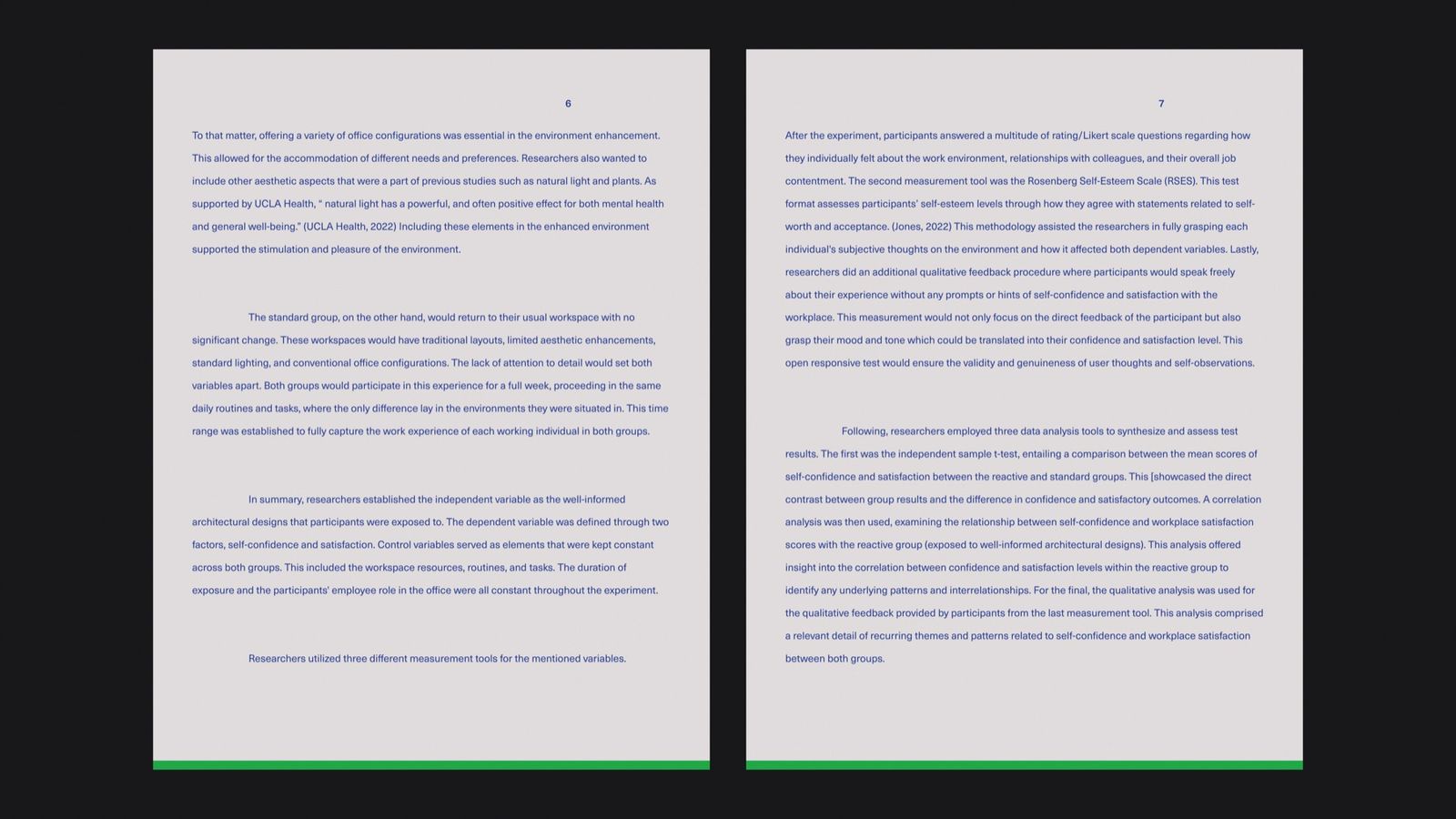
This study examines how architectural and aesthetic design affects self-confidence and workplace satisfaction. Using surveys, self-esteem scales, and qualitative feedback, it compares employees in enhanced versus standard workspaces.
Findings highlight the role of design in shaping well-being and performance, with implications for architecture, fashion, and workplace practice.